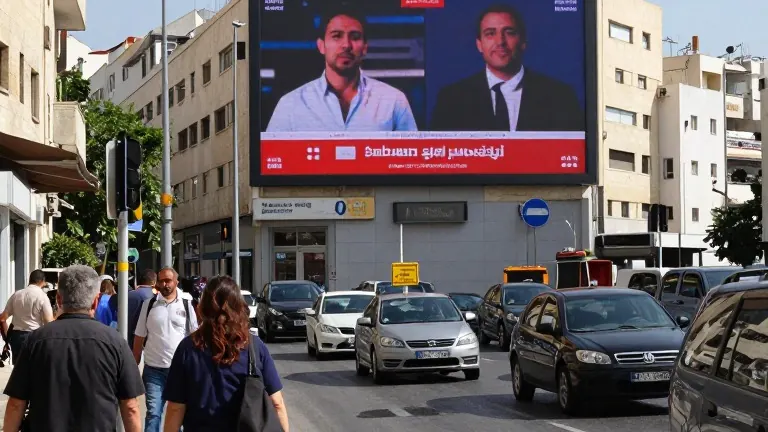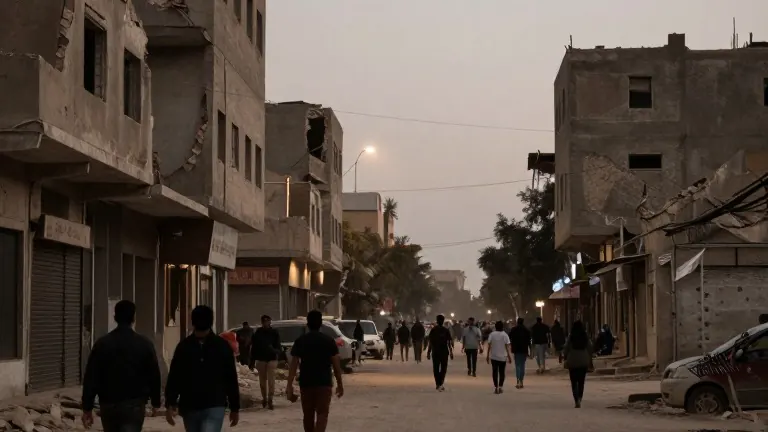
Israel Votes in Tense Netanyahu Referendum
Over 7.3 million Israelis cast ballots in a race polls predict will be tight, forcing weeks of coalition talks after the Oct. 7 attack reshaped the political agenda.
By Karan Cabrera ·
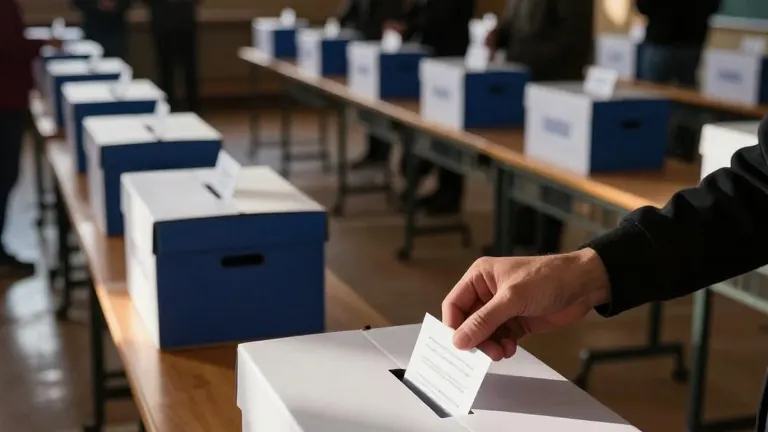
Israelis voted Tuesday in a national election that functions as a direct referendum on Prime Minister Benjamin Netanyahu's leadership following the October 7, 2023, Hamas-led attack. The outcome will determine whether the 77-year-old leader remains in power after nearly two decades of dominance or if the country enters a new political era.
The campaign was defined by the memory of the deadliest day in Israel's history. Netanyahu's primary rival, former military chief Gadi Eisenkot, visited Ofakim, a southern community hit by militants on October 7, to remind voters of the security failures. Eisenkot, who lost his son and two nephews in the Gaza war, framed the vote as a demand for accountability against Netanyahu's refusal to convene a state commission of inquiry.
Voters expressed mixed emotions at polling stations across the country. In Jerusalem, Noga Mizrahi, a resident of the attacked kibbutz Nirim, described the moment as never before critical. In Tel Aviv, families of victims and former hostages observed a moment of silence. Yona Adam, whose son Mapal Adam was killed, urged voters to remember those whose voices are no more. Conversely, Nisim Cohen, a reservist, argued that Netanyahu is not responsible for October 7 and should continue the wars in Gaza, Lebanon, and Iran until security is restored.
The electoral process involves voting for parties rather than individual leaders, as no single party has ever secured the 61-seat majority required in the 120-member Knesset. Opinion polls indicate a tight race between Netanyahu's bloc and Eisenkot's coalition, with no clear winner expected. This uncertainty sets the stage for weeks or months of negotiations among approximately a dozen parties projected to win seats.
According to Israel’s Central Election Committee, more than 7.3 million citizens are eligible to vote, including around 330,000 young Israelis who spent their high school years during the conflict. Approximately 12,000 polling stations opened for the vote, with thousands of volunteer observers from groups like Elections Guards monitoring procedures. Eyal Sher, a volunteer, stated that every vote counts to ensure the integrity of the process against a government he described as corrupt.
The election also highlights debates over domestic policy, including Netanyahu's efforts to exempt ultra-Orthodox Jews from military service and his 2023 judicial overhaul. While Israel's occupation of parts of Lebanon and Syria, along with its wars against Iran, holds broad support, candidates focused on the security breakdown of October 7. U.S. President Donald Trump recently backed Netanyahu's reelection, a move that marked a setback for the prime minister who had previously billed his ties to the Republican president as a key selling point.
Polling stations in most locations will close at 10 p.m. Ballots are manually counted at each station immediately after voting ends.
Source: Philadelphia Daily News