Texas Politics: Sharia Bills and Voter Turnout
Republican leaders in Texas are pushing anti-Sharia legislation, prompting a surge in voter registration among Muslim communities ahead of the November 3 midterms.
By John Wisniewski ·
Republican officials in Texas are pushing legislation to ban Sharia law, a move that has intensified tensions with the state’s Muslim population just days before the November 3 midterm elections. While national attention often focuses on Muslim candidates in other states, the conflict in Texas is rooted in specific state policies and rhetoric that community leaders say stigmatize their presence. The result is a highly charged local environment where voting is seen not just as a civic duty, but as a necessary defense against political exclusion.
The pressure on Muslim voters is deeply personal for many families in the state. Samir Nadjam, a 45-year-old lawyer in Houston, described the impact on his children during a community gathering at a local Islamic center. He noted that while adults can choose their social circles, children attend the same schools and are exposed to the attitudes of their peers' families. Nadjam said kids often say off-putting things, reflecting the wider climate of prejudice he feels most through his role as a parent.
Organizers are working to counter this sentiment by emphasizing turnout. Muslims make up less than two percent of Texas’s population, but groups like the Islamic Society of Greater Houston have expanded voter registration drives significantly. Emran Gazi, the society’s president, stated that the organization does not endorse specific candidates but urges members to vote according to their conscience. The goal is to ensure politicians understand that Muslims must be considered before any decisions are made against them.
The legislative push in Texas has been aggressive. Governor Greg Abbott announced at the Republican Midterm Convention in Dallas that the state would fully ban Sharia law. Senator Ted Cruz echoed this stance, calling Sharia fundamentally inconsistent with the Constitution. In June, the state Republican party adopted a platform titled “Don’t Sharia my Texas,” which proposes criminal punishment and disqualification from public service for proponents of Islamic law. A state legislative caucus dedicated to keeping Texas Sharia-free has grown to 38 members in the 150-seat chamber.
Critics argue the political response is disproportionate given that no jurisdiction in the US has enacted Islamic law. Mariam Ahmed, a 42-year-old physician, said the environment has been difficult enough that she considered leaving the country within the last two years. She expressed a desire to protect her child from being viewed as a terrorist, a fear she said has become more common. Sarah Dabbas, another physician, noted that the fear seems exaggerated compared to reality, pointing out that no one has ever imposed Muslim law on the US government.
The political climate has also affected prominent Republican Muslims in the state. Tensions peaked in June during the Republican Party of Texas Convention, where outgoing chair Abraham George told two Muslim delegates they should leave the party. In another incident, a state senator claimed Muslims are required by Sharia to lie. These interactions have led some conservative Muslims to reconsider their party alignment. One attendee, who asked to remain anonymous to avoid further harassment, described the experience as very hurtful and said he would skip voting for some Republican candidates in the upcoming election.
Local issues are serving as key mobilizing forces for Muslim voters. The Texas Board of Education recently approved a high school curriculum that critics say focuses disproportionately on radical Islam and misportrays the prophet Muhammad. Sania Rahim, who works with the Coalition for Peace, Relief, and Equity, noted that the diversity of the Muslim population in Houston makes broad communication difficult. However, the curriculum debate has energized the community. Sameeha Rizvi, a civic engagement organizer for CAIR, said many leaders encourage quietness, but she believes public action is necessary to make the state safer for their families.
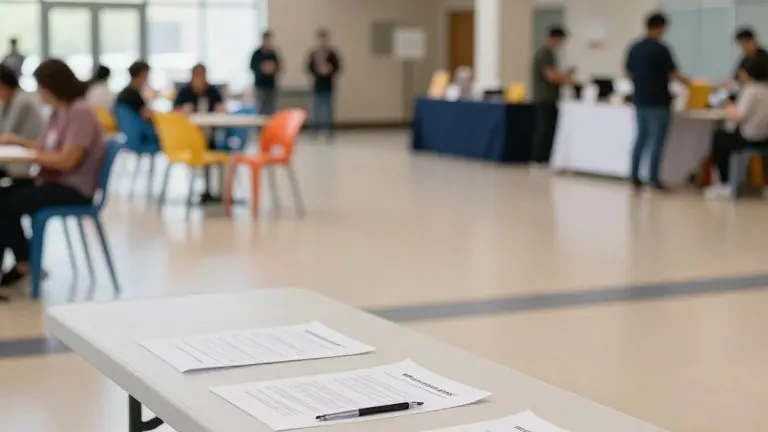
Voter engagement efforts are happening on the ground at community events across the state. At a recent festival in Houston, organizers set up tables to help residents register and cast ballots. Rizvi used a microphone to address the crowd, asking attendees to raise their hands if they had already voted or if they were registered but had not yet participated. She emphasized that voting is the clearest way to change the political landscape and ensure a safe environment for their families.
Source: Al Jazeera