Maryland midterms see near-presidential poll worker demand
Officials warn that without a massive volunteer workforce, the state's early voting surge could disrupt the election process.
By Giulia Gallagher ·
Thomas Hicks, former chair of the U.S. Election Assistance Commission, warned that Maryland is currently operating with presidential election staffing levels for a midterm cycle. Hicks stated that the nation requires three-quarters of a million poll workers for a presidential race and that the current midterm election is seeing comparable numbers of volunteers.
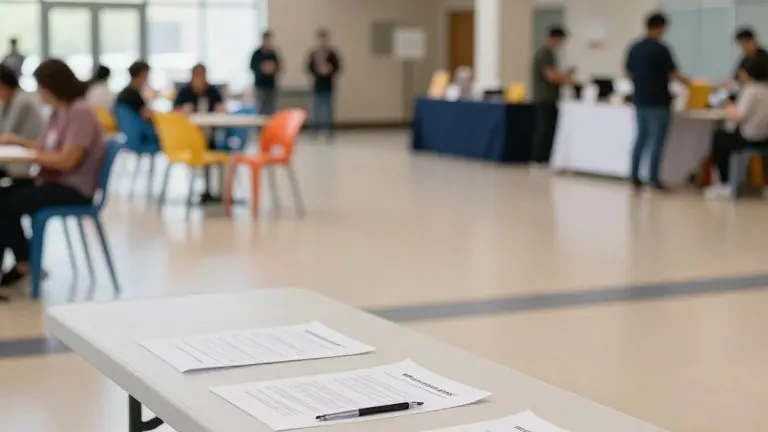
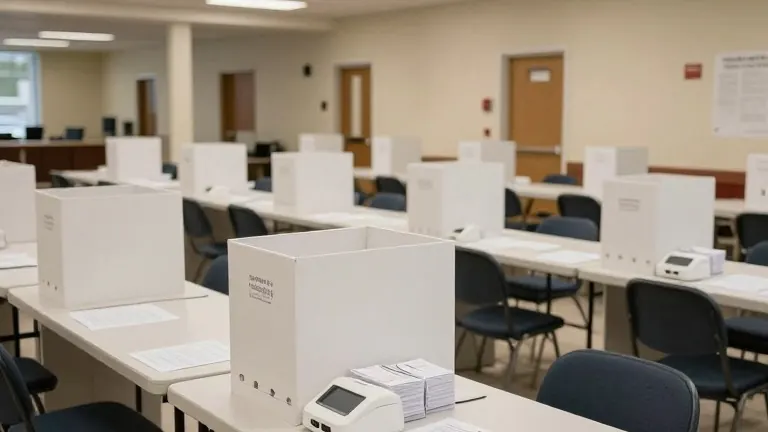
The state Board of Elections reported that more than 604,000 voters cast early ballots across Maryland. In the two counties with the highest early turnout, Prince George’s and Montgomery counties, nearly 190,000 voters participated between Oct. 22 and Oct. 29. At the Activity Center at Bohrer Park, one of 102 early voting centers, nearly 40 volunteers directed traffic through the facility on the final day of the early voting period.
Election officials describe the role of these volunteers as essential for checking in voters and ensuring ballots are cast correctly. Without sufficient staffing, officials said, the voting process may face operational friction. Hicks noted that some voters harbor frustration toward poll workers based on political rhetoric suggesting elections are manipulated, but he emphasized that the volunteers are primarily guiding the procedural steps of casting a vote.
The workforce includes long-time volunteers and recent retirees. Delia Millet, 64, has served at polls in Prince George’s County for nearly three decades. She described her motivation as a civic responsibility to help elderly voters who may need physical assistance and to support first-time voters. Millet said her initial goal was to diversify her work portfolio, but the role evolved into a way to remain involved in her community.
Rick Reinhard, 71, a retired executive director of a nonprofit, began serving as a poll worker in Montgomery County during the 2020 presidential elections. He said the position gave him a purpose after retirement. Reinhard and other candidates must pass a quiz and complete a three-hour in-person training session before each election. The curriculum covers station responsibilities and equipment operation. Reinhard said the team takes the process seriously, leaving little room for the kinds of errors that often fuel claims of voter fraud.
Gilberto Zelaya, a community engagement officer for the Montgomery County Board of Elections, has worked to expand the volunteer base by targeting younger demographics. Zelaya joined the board in 2003 and founded Future Vote in 2004. The program allows middle and high school students to serve as Election Day aides. Zelaya said he saw an opportunity to educate youth about the voting process while addressing the need for more staff at polling sites.
Source: The Baltimore Banner