Saudi, Pakistani, and Turkish Chiefs Gather in Tehran for Security Talks
The Mecca Joint Defense Agreement faces its first high-level operational test as delegations meet Iranian leadership to discuss regional de-escalation.
By John Wisniewski ·
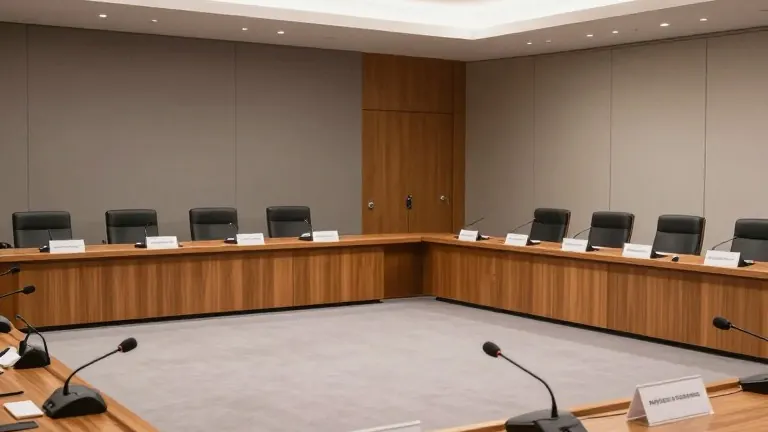
The geopolitical security market in the Middle East is undergoing a structural adjustment as regional powers seek to formalize their defensive alliances. On October 26, Saudi Arabia’s Defense Minister Khalid bin Salman arrived in Tehran for negotiations with Iran. This visit marks the first major diplomatic exercise under the Mecca Joint Defense Agreement, a trilateral pact involving Turkey, Pakistan, and Saudi Arabia that mirrors the collective defense clauses of NATO.
The alliance was established on August 7, 2026, when Saudi Crown Prince Mohammed bin Salman, Turkish President Recep Tayyip Erdogan, and Pakistani Prime Minister Shehbaz Sharif signed the agreement in Mecca. The pact includes a provision stating that an armed attack on one member constitutes an attack on all three. It also mandates expanded military cooperation, joint exercises, and the development of shared defense technologies. Turkey published the full text of the agreement in October, a move that precedes parliamentary ratification.
The delegation in Tehran includes Field Marshal Asim Munir, the army chief of Pakistan, and Ibrahim Kalin, the head of Turkish Intelligence. Their presence signals that the member states are prioritizing pragmatic consensus-building over immediate battlefield integration. Skeptics had previously questioned whether the pact possessed sufficient enforcement mechanisms, a doubt fueled by Houthi attacks on Saudi Arabia that left unclear whether Turkey and Pakistan would intervene militarily. The current talks aim to address those operational ambiguities.
Iranian Foreign Ministry Spokesperson Esmaeil Baghaei described the hosting of senior military officials as a key step toward regional diplomacy. He stated that the meeting aims to foster lasting stability and security in the Middle East through cooperative action. This messaging suggests a preference for regional autonomy in security matters, a stance that contrasts with the current position of the United States and Israel. Both nations have publicly declared that the war with Iran will continue, despite reports that Israeli military leaders were hesitant to launch strikes prior to recent domestic elections.
In Riyadh, Saudi Arabia’s Deputy Minister for Public Diplomacy Dr. Rayed Krimly confirmed the delegation’s mission. He stated that the talks are designed to ease regional tensions and encourage diplomatic solutions. The meeting is scheduled to include Iranian President Masoud Pezeshkian and Mohsen Rezaei, the Secretary-General of the Supreme National Security Council. This high-level engagement indicates that the member states view the current conflict as a period for diplomatic maneuvering rather than immediate escalation.
The Mecca pact brings together three major military powers, including the nuclear-armed state of Pakistan and NATO member Turkey. Analysts note that the agreement is less about immediate joint combat operations and more about coordinating strategic interests and sharing intelligence. Saudi Arabia, a conservative monarchy, and Pakistan, which has recently managed conflicts with India and Afghanistan, both favor cautious approaches to military engagement. Turkey, which was militarily active between 2016 and 2022, has also adopted a more reserved posture in recent years.
The Strategic Political and Defense Committee established by the agreement will continue to coordinate cooperation following these talks. The outcome of the Tehran meetings will determine whether the pact functions primarily as a diplomatic shield or evolves into a more integrated military command structure. For now, the focus remains on de-escalating the current situation through dialogue among the three founding nations and Iran.
Source: The Jerusalem Post
More Business · Scam Watch · Report a business · Got a Story?