Sunset in Baltimore Hits 4:43 p.m. in Early December After Time Change
Evenings in Maryland will darken by an hour immediately, with state officials warning that pedestrian and cyclist crash risks rise by up to 13% in the weeks following the clock shift.
By Giulia Gallagher ·
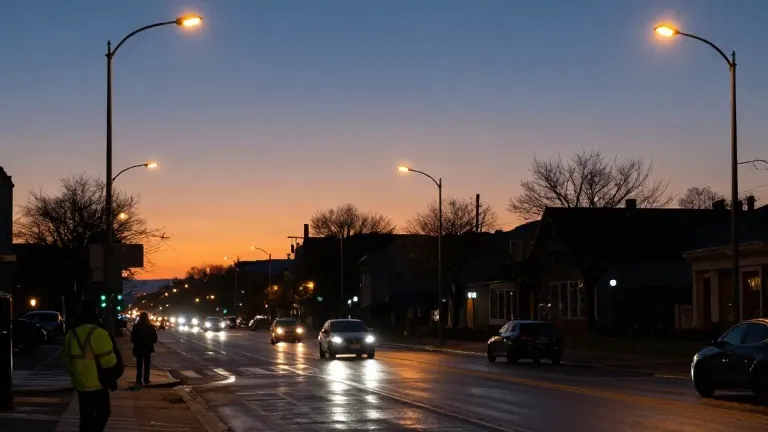
Maryland residents lost an hour of evening daylight on Sunday, Nov. 1, as the state and much of the country switched back to standard time at 2 a.m. In Baltimore, the sun set at approximately 5:05 p.m. on that day, an hour earlier than the previous day's 6:06 p.m. sunset. This immediate shift means evening commutes, after-school pickups, and outdoor activities now occur in fading light or full darkness.
The earliest sunset of the year will not occur on the winter solstice. According to calculations using standard solar formulas, sunset in downtown Baltimore will bottom out at approximately 4:43 p.m. between Dec. 2 and Dec. 12, with the absolute earliest moment arriving around Dec. 7. The shortest day of the year remains the solstice on Monday, Dec. 21, which provides about 9 hours and 23 minutes of daylight. The discrepancy between the earliest sunset and the shortest day results from Earth's axial tilt and elliptical orbit, which delay solar noon through December.
Daylight duration begins to increase immediately after Dec. 21, though the initial gains are measured in seconds. Evening light returns faster than morning light; by mid-January, sunset will be after 5 p.m. again, and by Feb. 1, it will be around 5:27 p.m. Mornings will not show noticeable brightening until mid-January. The latest sunrise in Baltimore, occurring around 7:27 a.m., will arrive in the first week of January. Clocks will spring forward again at 2 a.m. on Sunday, March 14, 2027, pushing sunset times past 7 p.m. overnight.
State officials warned that the transition to darker evenings poses specific risks for road safety. The Maryland Department of Transportation stated in a release dated Oct. 27 that research indicates fatal crashes involving pedestrians and bicyclists can increase by as much as 13% in the weeks following the time change. In 2025, Maryland recorded 2,704 pedestrian-related crashes, a 7% decrease from 2024. Those incidents resulted in 101 pedestrian deaths and 2,399 injuries.
Will Pines, the Maryland State Highway Administrator, urged roadway users to adjust their behavior. "We urge all roadway users to slow down, eliminate distractions and help protect our most vulnerable travelers," Pines said. The state recommends that drivers verify vehicle lights are functioning and stop for pedestrians in crosswalks. Pedestrians and cyclists are advised to wear bright or reflective clothing and use marked crosswalks with streetlights. Commuters should expect the 5 p.m. rush hour to occur in near-darkness through January.
For families and outdoor enthusiasts, after-school activities ending around 5 p.m. will conclude at or after sunset for most of November and December. Residents planning park visits or weekend runs should aim to finish by 4:30 p.m. in early December to maintain daylight. The period of reduced daylight is temporary; by Valentine’s Day, Baltimore will have more than 10.5 hours of daily sunlight, and the clocks will advance again one month later.
Source: Baltimore Chronicle