Slovenia's Triglav Glacier Vanishes After 19th Century Decline
The final ice patch on the country's highest peak has disappeared, marking the end of a data source that has tracked Alpine climate shifts for decades.
By John Wisniewski ·
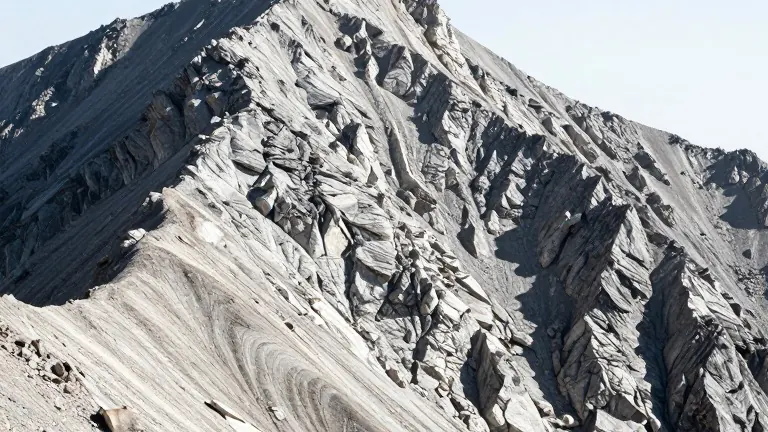
The last remaining ice on Slovenia's Triglav glacier has melted away.
New photographs taken before and after snowfall this month show no ice on the mountainside. This marks the end of the main ice body, which had shrunk to a few meters in width by the end of the summer heat.
The glacier has lost 93% of its surface area since 1983. Historical records indicate the ice covered about 40 hectares in the mid-1800s. By 1946, the first formal measurements showed the area had reduced to 14 hectares. The ice clung to the rock for two more decades after researchers expected it to disappear earlier in the 2000s. In the last five years, which include Europe's three hottest years on record, the remaining ice broke into isolated pockets.
Matija Zorn, director of the Anton Melik Geographical Institute, began measuring the site in 2001. He noted that the location where he had to put on crampons for grip moved back every year. In 2002, he extracted a five-meter ice core from a specific spot. The following year, he stood on rock at that same location. Zorn described the melting as incredible and stated that the glacier holds a central place in Slovenian national identity. He said the loss represents the disappearance of a key data source for climate change indicators.
The retreat of the Triglav glacier is part of a wider trend in the Alps. Swiss glaciologists reported that nearly a fifth of the country's ice disappeared in the last five years. The volume of Swiss ice dropped by 5.5% in 2026. Scientists have described the resulting terrain as moonlike rock deserts. Western Europe experienced its hottest summer on record this year. This heat caused an estimated 50,000 heat deaths and led to failed harvests and power plant shutdowns.
Miha Pavsek, a glaciologist and mountain guide, said people are not yet taking the changes seriously. He has a photograph of his parents on the glacier from 1957. Pavsek stated that with the melting of the glacier, a part of him is also going away. He noted that glaciers are not eternal, despite being viewed that way by humans. Scientists have found ice in caves beneath Triglav as the retreat exposed new shafts. A second glacier on the Skuta mountain has also thinned, but its better shading is expected to allow it to hold out for a few more years.
The Anton Melik Geographical Institute will continue to monitor the exposed rock and subglacial caves. The institute plans to analyze the geochemical data from the remaining ice in the caves to further understand the mountain's history.
Source: The Guardian
More Business · Scam Watch · Report a business · Got a Story?