RENFE Train Strikes Stopped IRYO Service in Toledo, Killing At Least 30
A high-speed collision in central Spain on Wednesday morning derailed two cars, leaving one vehicle shredded across a gravel slope.
By Karan Cabrera ·
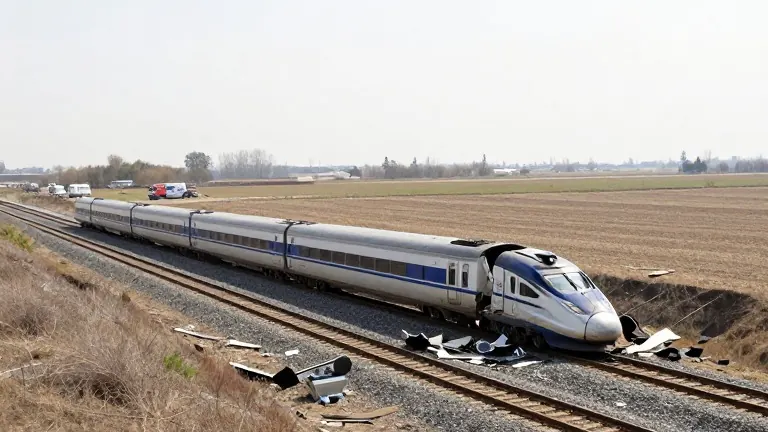
A state-owned RENFE high-speed train struck the rear of a stationary IRYO train on Wednesday morning in the province of Toledo, killing at least 30 people. The impact derailed two carriages, sending debris across a gravel slope in a flat, field-surrounded stretch of track between the towns of Urda and Los Yébenes.
Esther Padilla, the spokeswoman for the Castilla La Mancha region, confirmed to state broadcaster TVE that the two trains were traveling in the same direction from Madrid to Seville. She stated that the RENFE service carried 397 passengers, while the IRYO train held 147. Spanish authorities initially reported 10 deaths, but local media later raised the count to at least 30. Padilla noted that the number of fatalities would likely increase as rescue operations continue.
Spanish Health Minister Mónica García described the collision as a high-speed impact that she expected to become a tragedy. Emergency workers focused on extracting survivors and bodies from the two most damaged cars, while injured passengers were transported to various hospitals in the area. A military emergency brigade joined firefighters and police at the site to assist in the response.
The accident involved services from Spain's state-owned RENFE and the Italian-owned private operator IRYO. Media reports indicated that the RENFE train rammed the IRYO train, which had come to a stop. IRYO said in a statement that it activated security protocols and was coordinating closely with authorities. The cause of the crash remains unknown, according to regional officials.
This incident marks the second major rail accident in Spain this year. In January, 45 people died in southern Spain when a train left the track and collided with an oncoming service. That crash was the deadliest in the country since 2013. The current event has further strained confidence in Spain's extensive high-speed rail network, prompting Prime Minister Pedro Sánchez to cancel his schedule to focus on the response. Sánchez, who faces a national election next month, wrote on X that he was dismayed by the serious accident in Toledo. Regional president Emiliano García-Page traveled to the crash site, and the mayor of Urda prepared a local sports pavilion to house injured passengers.
Rail service between Madrid, Ciudad Real, and Andalusia was suspended following the collision. The wrecked train car was reduced to bits of metal and other material, scattered down the slope near the collision point. Emergency services continued to work on site to attend to the affected passengers, with all thoughts directed toward the victims and their families by national leadership.
Source: WYPR