Spain's Transport Chief Steps Down Following Fatal Rail Collision
Óscar Puente resigns after 69 deaths and pledges new safety software ahead of the November ballot.
By Giulia Gallagher ·
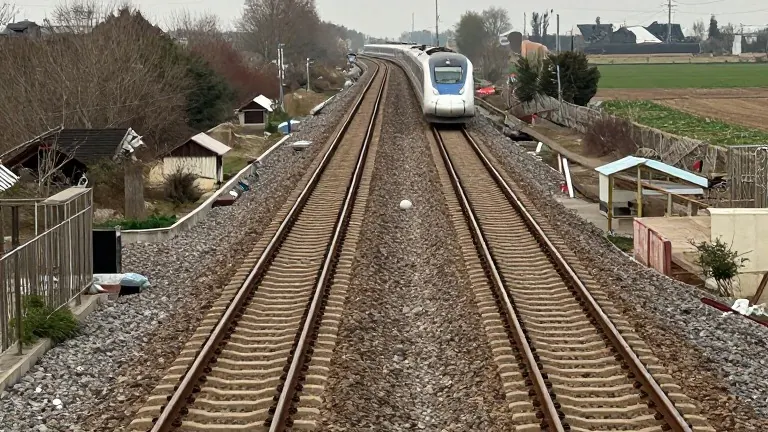
Sixty-nine people died in a high-speed rail collision outside the village of Urda last Wednesday. The accident, located approximately 80 miles south of Madrid, stands as one of the most severe railway disasters in Europe during this century.
Óscar Puente, the Spanish minister of transport, submitted his resignation on Tuesday. He simultaneously announced he would withdraw his name from the lists for the early legislative elections scheduled for 29 November. During a lengthy hearing before lawmakers, Puente stated, “I wish to inform you that I am not only stepping down from my position as minister of transport, but that I am also withdrawing my name from the lists for the early legislative elections on 29 November.”
The crash occurred when a train operated by the state-owned company Renfe struck the rear of a stationary train belonging to the private operator Iryo. An automatic safety system failure had halted all trains on a 39-mile stretch of track. Despite this, a control center authorized the Renfe service to resume its journey. Puente had previously ruled out resigning on several occasions following the disaster.
Hours before the hearing, the minister presented measures to improve safety at a press conference. He announced the creation of software for control centers that would issue automatic alerts and identify traffic anomalies. An AI agent would oversee this system to minimize human error. In scenarios where the automatic safety system is offline, a second operator must confirm any decision made by the first operator.
Right-wing opposition groups and labor unions criticized Puente for initially directing blame toward a single control center operator. The train drivers' union Semaf has called for strikes on 10 and 12 November, citing worsening working conditions and the use of degraded systems. Critics argue that maintenance investment has lagged behind passenger growth since the 2021 liberalization of Spain's rail network.
In response to union demands, Puente said the working conditions of control center operators would be reformed. These changes include adjustments to break schedules and the monitoring of fatigue levels. The minister also announced an aid package worth 30 million euros for the families of the dead and those injured in the crash.
Another collision occurred in January in the Andalusia region. That incident killed 46 people on the same key line connecting Madrid with Seville, which opened as Spain's first high-speed route in 1992.
Source: The Guardian