Pedro Sanchez faces rail safety crisis before Spain's November election
A high-speed train collision that killed 69 people has shifted the campaign focus from housing to infrastructure accountability.
By Giulia Gallagher ·
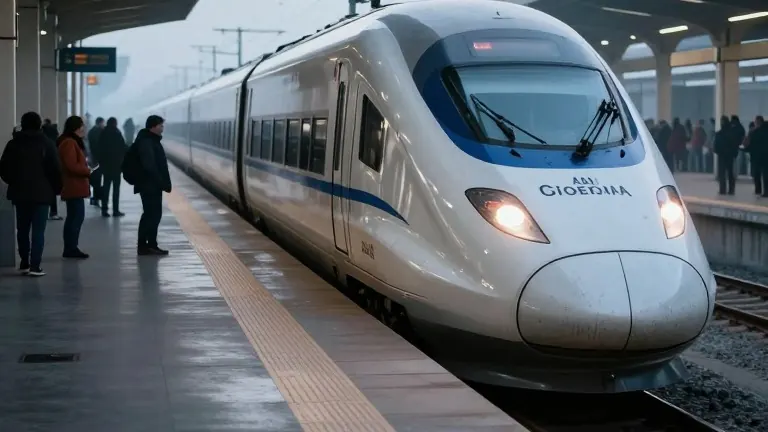
Sixty-nine people died when a high-speed train traveling from Madrid to Seville collided with a stationary train on the same track near Toledo on Wednesday morning. The impact occurred at 8:53 am local time, just nine months after a similar deadly rail accident in the country.
The crash disrupted the campaign narrative of Prime Minister Pedro Sanchez, who had prepared to center the November 29 election on Spain's housing crisis. Sanchez posted on X shortly after 9 am, citing reasons for optimism about the nation. Within an hour, news of the collision emerged, forcing a rapid shift in political priorities toward railway infrastructure and public service reliability.
Yolanda Roman, global director for public affairs at ATREVIA, stated that the tragedy altered the campaign tone. She noted that while no party wins from the disaster, the conservative Popular Party (PP) is now in a more comfortable position to challenge the government on competence. Roman said the political framing changed dramatically because the Socialists were moving toward a debate they believed they could manage.
Alberto Nunez Feijoo, the PP leader, demanded accountability while calling for two days of suspended campaign activities. He stated that Spaniards are asking tough questions that require answers, despite the need to respect the dead and injured. In contrast, Santiago Abascal, the leader of the far-right Vox party, adopted a more aggressive stance. He declared on X that Vox would not maintain a complicit silence and would work to remove what he described as a mafia-like gang from power.
Hundreds of demonstrators, primarily from the far-right, gathered outside the Transport Ministry to call for Sanchez's resignation. A banner at the protest read, "Spain can't take it anymore." Officials pointed to a failure in the LZB train-control system, which has operated on the Madrid-Seville line since the 1990s, as the likely cause of the crash.
Transport Minister Oscar Puente defended the rail network as reliable and safe, though he acknowledged the roles of equipment limits and human error. Isabel Pardo de Vera, former president of the state-owned railway infrastructure company Adif, criticized the government's pace in transitioning from the older LZB system to the European Rail Traffic Management System. Her comments raised questions about whether warnings regarding the network's condition had been addressed.
The accident revived memories of the 2013 derailment at Angrois, which killed 80 people. Spain's high-speed rail network carried approximately 45 million passengers last year. A survey conducted in January following the previous fatal crash found that 57 percent of respondents believed rail services had deteriorated since Sanchez took office, and nearly 60 percent expressed little or no confidence in the system.
Sanchez's government faces additional pressures from corruption scandals involving his inner circle. Investigations have targeted his wife, Begona Gomez, and his brother, David Sanchez, over alleged influence-peddling and business corruption. Both deny wrongdoing. The government also faced criticism over border infrastructure following the crossing of 80,000 migrants into Ceuta in late July.
The Socialists had aimed to sway an estimated 750,000 undecided left-wing voters with their social agenda, which included a series of measures dubbed Social Tuesdays. However, the crash has forced the government to spend more time defending its record. The latest polls this week show the Socialists at 26.7 percent, trailing the PP at 31.5 percent, with Vox in third at 19.1 percent.
Source: Al Jazeera