
NOAA predicts historic El Niño will drive warmer, wetter winter across U.S.
Forecasters warn that a strong climate pattern may increase flood risks on coasts while bringing rain to drought-stricken regions.
By Giulia Gallagher ·
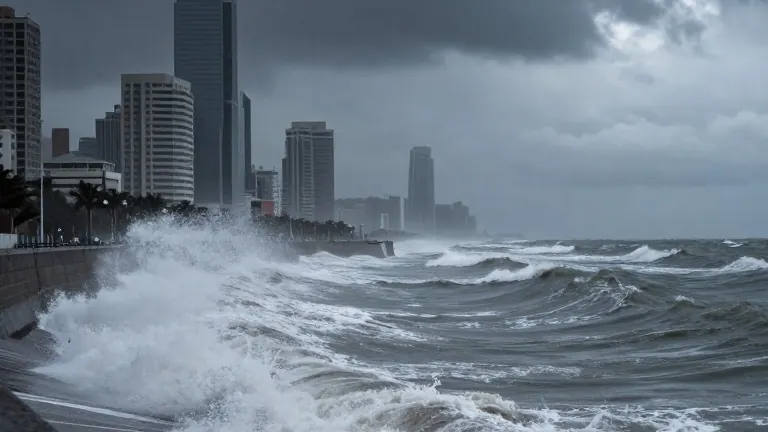
Forty-two people died in Central Florida during a 1998 El Niño event, a number that underscores the potential danger of the current climate pattern. The National Oceanic and Atmospheric Administration now forecasts that the 2026-2027 winter will be warmer and wetter than average due to a powerful El Niño developing in the Pacific.
El Niño is a recurring warming of sea surface temperatures in the equatorial Pacific. This year, scientists describe the event as potentially the strongest on record. Ken Graham, director of NOAA's National Weather Service, called it a strong, if not historic, El Niño. The phenomenon releases heat into the atmosphere, shifting global weather patterns. NASA climate scientist Josh Willis describes the event as a monster stretching across the ocean, with consequences that reach from drought in Southeast Asia to high tides on the U.S. West Coast.
Regional impacts vary significantly. The Southwest is already experiencing the effects, with severe flooding in the Four Corners region forcing evacuations in late October. Daniel Swain, a climate scientist at the University of California, notes that record-warm waters off the West Coast fueled these storms. However, Swain cautions that increased rainfall will not immediately resolve the water crisis in the Colorado River basin, where reservoirs remain at record low levels.
On the coasts, forecasters expect above-average precipitation in California and the Northeast. A Kelvin wave, a large band of warm water, has recently raised sea levels along the California coast. Dillon Amaya, an atmospheric sciences professor at North Carolina State University, explains that these waves increase the likelihood of coastal flooding. In the Northeast, El Niño conditions may strengthen nor'easters, leading to more frequent storms and coastal erosion similar to the record-setting events of 2023.
The Midwest faces different challenges. Warmer temperatures are expected to reduce snowpack in the Upper Midwest, while Michigan, Ohio, and Indiana may remain drier than normal. Jon Gottschalck, a meteorologist with NOAA, said drought conditions in the Midwest are expected to persist and may even worsen this winter. In contrast, the South has the highest chance of above-average precipitation, with northern Texas and the Florida panhandle potentially seeing snow or heavy rain.
While El Niño often brings milder winters to the northern United States, it does not eliminate the risk of snow. Graham noted that the 2016 El Niño produced a blizzard with over 30 inches of snow and 60 mph wind gusts in the Northeast. Cities are using these seasonal predictions to prepare infrastructure and allocate resources. Graham stated that earlier and better decisions save lives by allowing officials to assess risks and mitigate potential impacts before severe weather arrives.
Source: WYPR