Bristol roads face crack risk as wet winter hits clay soil
Council officials warn that a combination of last summer's drought and forecast winter rain could cause sub-surface movement in the city's southern districts.
By Giulia Gallagher ·
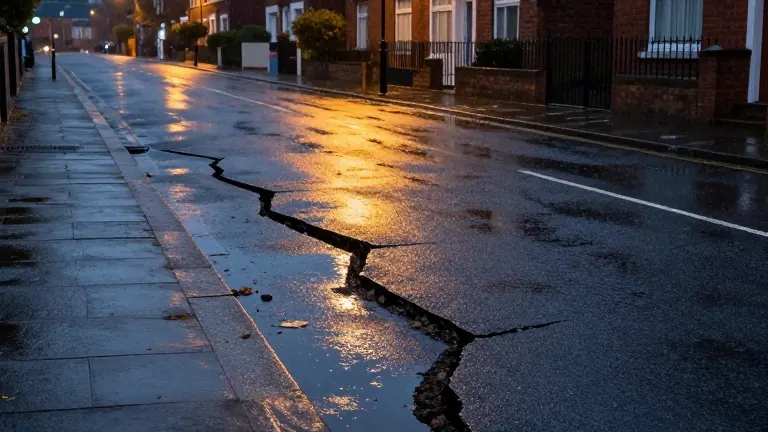
A conflict between seasonal weather patterns and underlying geology is setting the stage for potential road damage in Bristol. The city experienced a hot, dry summer in 2026, which dried out the soil. Meteorologists now predict a very wet early winter driven by El Niño conditions. Officials fear this rapid shift from dry to wet will cause the ground beneath the tarmac to expand and contract violently.
The risk is concentrated in the south of the city, where much of the infrastructure is built on clay. This specific soil type shrinks when dry and swells when saturated. If the clay freezes while waterlogged, it can expand further, lifting the road surface above it. This process can create large cracks overnight, a phenomenon previously documented in other clay-rich regions of the country.
Shaun Taylor, the council’s head of highways, briefed the transport policy committee on October 22. He described the situation as a direct result of the dry summer followed by the wet winter. Taylor noted that while Bristol had not yet seen overnight cracking, he was monitoring the condition closely. He stated that the next few months would determine the severity of the damage based on how the weather evolves.
The council is responding with a strategy of partial reconstruction rather than patching individual potholes. This method involves crews repairing larger sections of road, typically between 10 and 30 square metres. This approach aims to create a more permanent surface that resists the formation of new holes. The council has already applied this technique at 30 locations and has commissioned a contractor to treat 86 sites in total.
Recent data shows fewer than 1,000 potholes were reported on Bristol roads over the last three months. However, the upcoming weather may change that trend. The council also relies on its own inspection teams and public reports submitted through the FixMyStreet platform to identify issues like fly-tipping and surface damage.
Local officials have witnessed the effects of the soil movement firsthand. Labour councillor Tim Rippington reported that a recent excavation of his front patio revealed an air gap of about six inches under the concrete. He attributed this gap to the lack of moisture in the soil during the dry period, noting that the ground had dipped down and could have collapsed within weeks.
Source: Bristol Post