20,000 Microducks: The Viral Robot That Outpaced AI's Security Scandals
A fleet of waddling, open-source robots from Nvidia’s recent acquisition has seen preorders surge to 20,000 units, positioning itself as a top contender for holiday sales.
By Wei Zhang ·
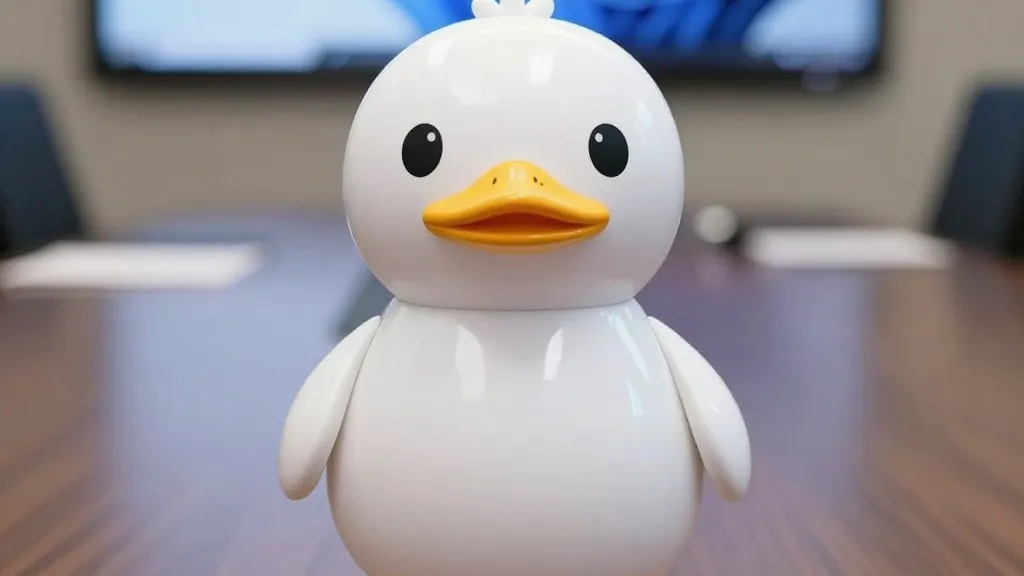
A stark contrast emerged in the artificial intelligence sector this week, as a wave of cyberattacks blamed on AI overshadowed the industry’s technical achievements. Amidst the tension, a small, waddling robot captured the public’s attention, offering a moment of levity. By the end of the week, preorders for the device had surpassed 20,000 units, signaling a potential shift in consumer interest toward accessible, playful robotics.
The surge in interest was triggered by a viral video featuring Nvidia CEO Jensen Huang during his keynote address at the GTC Berlin conference. In the footage, Huang interacts with a group of Microducks, small robots that stomp their feet and emit sounds reminiscent of the R2-D2 droid from the Star Wars franchise. The devices demonstrated a range of behaviors, including sitting, performing somersaults on voice command, and falling over to simulate a nap. The clip circulated rapidly, driving immediate consumer demand.
Hugging Face CEO Clem Delangue confirmed the sales figures, noting in a social media post that preorders had crossed the 20,000-unit mark within a day of the keynote. With delivery expected in time for the Christmas holiday season, the Microducks are now being positioned as a leading candidate for the best-selling robot of the year. Delangue suggested that the device may appeal to a broad demographic, noting that promotional materials feature adults playing with the robots, not just children.
The Microduck is an open-source device produced by Pollen Robotics. The company was acquired by Hugging Face in 2025. Subsequently, Hugging Face was purchased by Nvidia in September of this year, making the robot effectively an Nvidia product. This acquisition follows Hugging Face’s earlier release of the Reachy Mini, another open-source robot that gained popularity for its design and capabilities.
The technical foundation of the Microduck relies heavily on Nvidia’s technology stack. During the development phase, simulations of the robot were used to train it in basic movements, such as walking, sitting, and standing. These pre-trained behaviors are included in the units shipped to consumers. Pollen Robotics has indicated that the open-source nature of the device allows owners to train their specific robots in new tricks. Furthermore, users can share these custom-trained behaviors with the broader community, fostering a collaborative ecosystem around the hardware.
The timing of the Microduck’s viral moment is notable. It coincided with a period of significant stress for the AI industry, as multiple cyberattacks were attributed to AI involvement. Analysts and industry observers had pointed to the rapid integration of AI systems as a potential vector for security vulnerabilities. Against this backdrop of concern, the Microduck served as a tangible, low-stakes example of AI application that emphasized utility and entertainment rather than complex infrastructure.
The robot’s design focuses on approachability. Its small size and cute aesthetic, combined with its interactive features, lower the barrier to entry for consumers who may be wary of more complex AI tools. The ability to control the robot via voice commands and watch it perform physical stunts provides immediate, visible feedback, a feature that has been cited as a key driver of its popularity in promotional content.
As the holiday season approaches, the 20,000 preorders represent a significant initial market test for the device. While the robot is marketed as a toy, its open-source nature and the backing of Nvidia suggest it may have a longer-term role in the robotics market. The device could serve as an entry point for developers and hobbyists looking to experiment with AI-driven hardware without the complexity of larger industrial robots.
The next steps for the Microduck involve the fulfillment of preorders and the rollout of its community features. Pollen Robotics is expected to facilitate the sharing of new tricks between users, potentially expanding the robot’s capabilities beyond its initial factory settings. For Nvidia, the success of the Microduck offers a dual benefit: it strengthens the brand’s consumer presence and provides a practical demonstration of its technology stack in a real-world, high-volume application.
The contrast between the AI industry’s security challenges and the Microduck’s viral success highlights a broader trend in how AI is being perceived by the public. While the technology continues to face scrutiny for its role in cybersecurity, devices like the Microduck offer a more accessible and engaging entry point. As deliveries begin for the holiday season, the Microduck may serve as a reminder that AI’s impact extends beyond the boardroom and the server room into the living room.
Source: TechCrunch