Israel Veteran Completes Ironman in Hawaii Three Years After Leg Amputation
Boris Shtonda finished the 226-kilometer race on a prosthetic, marking the end of a long recovery that began after he was wounded in Gaza.
By John Wisniewski ·
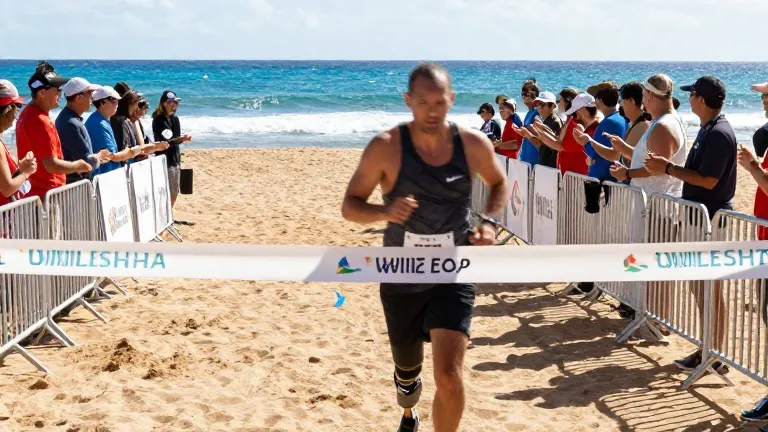
Boris Baruch Shtonda crossed the finish line at the Ironman World Championship in Hawaii on October 10. He completed the 226-kilometer event on a custom-fitted running prosthetic. The race ended a recovery process that started roughly three years ago when he lost his right leg in the Gaza war.
Shtonda competed in the division for athletes with disabilities. The course required him to swim 3.8 kilometers, cycle 180 kilometers, and run a full marathon. He had been serving as a reservist in the IDF's Duvdevan unit following the October 7 attack. An explosive device in Beit Hanoun, a city in northern Gaza, severely wounded him about a month after his deployment. Doctors amputated his right leg above the knee after several surgeries.
Athletic challenges became a central part of his rehabilitation. He climbed Mount Kilimanjaro twice and swam across the Sea of Galilee. He also finished a half Ironman race in Spain before deciding to train for the full event in Hawaii. The preparation took a year and a half. Friends of the Israel Defense Forces, known as FIDF, backed his training efforts.
Mike Hochstein, an FIDF supporter from Dallas, met Shtonda during a bike ride through Israel last year. Hochstein said Shtonda's dedication and perseverance are truly inspiring. Shtonda dedicated the race to wounded soldiers and anyone going through rehabilitation. He told those in recovery to be their own heroes and believe in themselves.
FIDF says its support for Shtonda is part of wider work to help wounded IDF soldiers and their families. The organization uses rehabilitation, sports, and adventure activities to build physical and mental resilience. The goal is to help veterans regain independence and set new goals beyond initial medical treatment.
Nadav Padan, the FIDF CEO, said the result reflects the determination wounded soldiers bring to long rehabilitation. He stated that recovery does not end when medical treatment is over. Padan added that it requires continued support and the opportunity to rebuild strength and confidence. He noted that FIDF supporters in the United States help wounded soldiers and their families through that process.
Source: The Jerusalem Post