Algeria deploys troops to Niger amid rising regional tensions
Algeria has sent troops to Niger for the first time since 1973, a strategic move driven by energy interests and growing tensions with the UAE and Morocco.
By Karan Cabrera ·
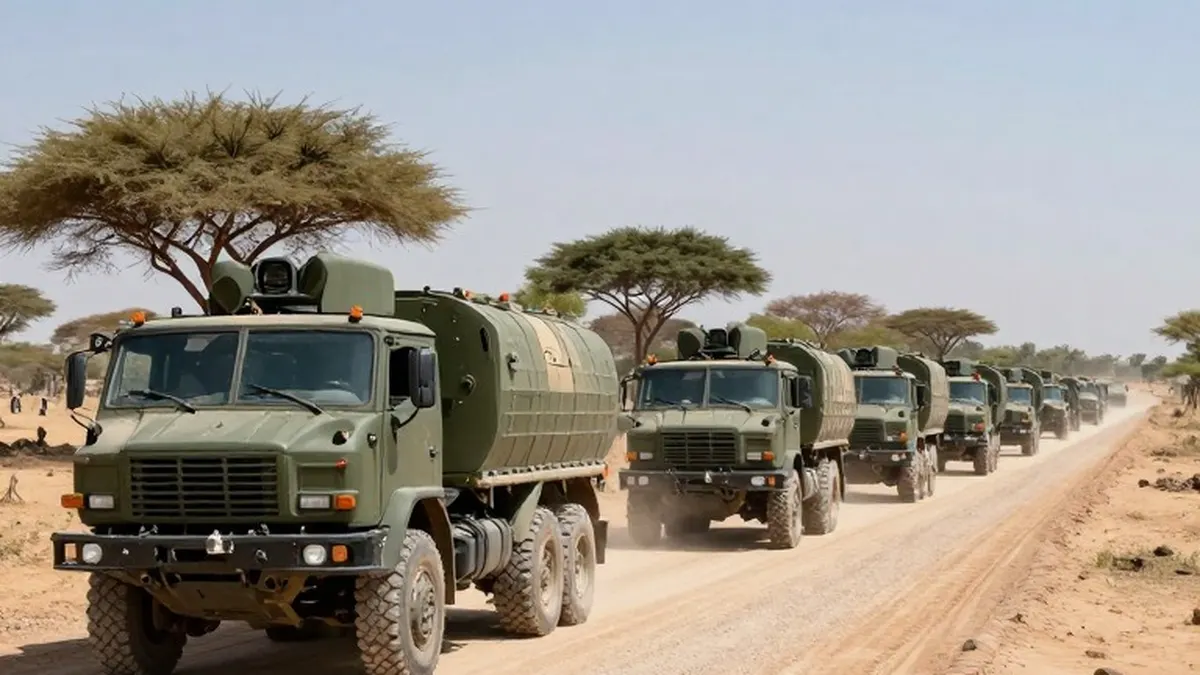
Algeria has broken with decades of military tradition by deploying a convoy of troops to Niger. The arrival last Friday marked the first time the North African nation has sent forces abroad since 1973, when it supported Egypt in the war against the Israeli occupation of the Sinai peninsula. This move represents a significant shift from Algeria's historical policy of non-intervention and follows an earlier decision in August to send four fighter jets to assist President Abdourahamane Tiani during an attempted coup.
Although Algerian President Abdelmadjid Tebboune previously opposed the 2023 coup that brought Tiani to power, Algiers is now providing the leader with critical support. Tiani formally requested the military deployment, which Algerian Senator Belkacem Boulghiti explained is intended to protect economic infrastructure and oil facilities owned by Algerian companies. Boulghiti emphasized that the soldiers are not being sent to wage war but to safeguard national interests.
Retired diplomat Amar Belani suggested in an October article that the deployment is a response to a destabilization strategy involving the United Arab Emirates, Morocco, Israel, and certain French proxies. He argued that continued instability in the Sahel region directly threatens Algerian interests, particularly the planned Nigeria-Niger-Algeria trans-Saharan gas pipeline. Zine Ghebouli of the European Council on Foreign Relations noted that the region is imposing new security imperatives on Algiers, especially in the energy sector.
Tensions with the UAE have escalated significantly, leading Algeria to sever diplomatic relations in September. The Algerian foreign ministry stated that it had repeatedly warned Abu Dhabi about its hostile actions but that the UAE persisted in behavior deemed unacceptable between sovereign states. Ghebouli described the Emirati role as destructive, noting that Algeria views Abu Dhabi's support for rival armed groups in Sudan, Somalia, Libya, and Yemen as a threat to regional stability.
The UAE has intensified its engagement with Sahelian military regimes through diplomacy and investment. In May 2025, Emirati minister Sheikh Shakhboot bin Nahyan met with leaders from Mali, Burkina Faso, and Niger to discuss cooperation in energy and security. Ghebouli observed that Algeria now actively treats the Sahel as an extension of its national security, using military presence to reinforce its redlines against foreign intervention.
Another key concern for Algiers is the influence of Khalifa Haftar, the de facto ruler of eastern Libya and a UAE ally. Haftar's military expansion toward the corridors connecting Libya and Niger has heightened Algerian anxieties. Jalel Harchaoui, a Libya analyst, pointed out that Haftar's son Saddam supports a Nigerien opponent of Tiani, placing the two families on opposing sides. While Turkey's recent rapprochement with Haftar may offer Algeria a back channel, the primary focus remains on securing stability within Niger.
Economic interests, particularly in the energy sector, are central to this strategic move. Algeria's national energy company Sonatrach is jointly developing a 4,000-kilometer pipeline with Niger and Nigeria to transport gas to Europe. Dr. Fatiha Dazi-Heni of Irsem explained that the troops are meant to protect these installations and the pipeline corridor. This effort is a direct counter to a rival pipeline promoted by Morocco along an Atlantic route, which the UAE has agreed to support financially and technically.
By securing Niger, Algeria is protecting its preferred route for the trans-Saharan pipeline against the Morocco-UAE axis. Dazi-Heni noted that Rabat and Abu Dhabi, along with Israel through its partnership with Morocco, have a vested interest in the Atlantic route prevailing. This deployment reflects Algeria's traditionally cautious strategic culture adapting to new constraints, as the country seeks to safeguard its energy ambitions in a increasingly competitive regional landscape.
Source: Middle East Eye