Caribbean Diplomacy: Regional Bloc Fractures Over Cuba Sanctions Vote
Trump administration pressure and visa restrictions drove a split among Caribbean states, with three nations abstaining and three others absent during the UN roll call.
By Karan Cabrera ·
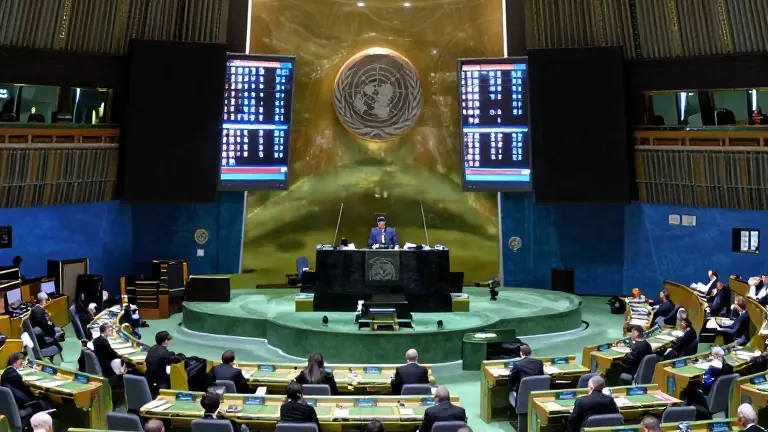
Caribbean nations that have historically stood together at the United Nations fractured this week over a resolution to end the United States embargo on Cuba. The vote, held on Wednesday, exposed deep divisions within the 15-nation regional bloc as governments weighed their diplomatic ties against domestic political realities.
The final tally showed 130 nations voting against the US blockade. Seventeen countries voted in favor of maintaining the sanctions, while 25 abstained. Within the Caribbean group, the alignment was uneven. Bahamas, Barbados, Belize, Grenada, St. Kitts, St. Vincent, and Suriname voted to end the embargo. Haiti, Guyana, and Jamaica chose to abstain. Delegations from St. Lucia, Antigua, and the Dominican Republic were not present when the roll was called.
Trinidad and Tobago cast the only outright no vote from the region. Prime Minister Kamla Persad Bissessar defended the decision in a social media post, arguing that the island’s position was consistent with its support for democratic governance. “We respect the sovereign right of other nations to determine their foreign policy, and we expect that same respect in return,” Persad Bissessar wrote. She added that those supporting dictatorship in Cuba would not accept it at home, calling the Cuban system a military dictatorship.
Jamaica offered a different explanation for its abstention. Information Minister Dana Morris Dixon insisted that external forces did not influence the decision. “There was no one influencing Jamaica. Jamaica is a sovereign nation and Jamaica made a decision to abstain,” Dixon stated. Foreign Affairs Minister Kamina Johnson Smith provided a more detailed rationale, noting that Jamaica did not vote against the resolution because it opposes unilateral action under the UN Charter. However, she argued that voting for it was also ineffective because repeated annual resolutions had not improved Cuba’s humanitarian crisis.
Guyanese officials have not yet publicly commented on their country’s abstention. The divergence in voting patterns has raised questions about the influence of Washington, particularly regarding the Trump administration’s recent diplomatic tactics. Regional analysts and political observers note that the US has applied pressure on Caribbean states through visa policies and trade agreements.
The United States has imposed severe visa restrictions on Antigua and Dominica as part of a broader strategy to manage deportation flows. Dominica has already received its first group of non-national deportees, while Antiguan and US officials continue negotiations regarding the size of future arrivals. These diplomatic maneuvers have created a tense backdrop for Caribbean foreign policy decisions.
Cuba’s Ambassador to Antigua, Sergio Martínez González, acknowledged the complexity of the regional split. He stated that the resolution’s passage holds special significance for the Cuban people, who face the direct daily effects of the blockade. Despite the absence of several key regional partners, the international majority voted to maintain pressure on the US to lift the decades-old financial restrictions.
Source: Caribbean Life