Rivian CEO Scaringe pivots earnings call focus to self-driving rollout
The company plans to test hands-free driving on its own staff this year before launching robotaxis with Uber in 2028, all while scaling production of its new R2 SUV.
By Karan Cabrera ·
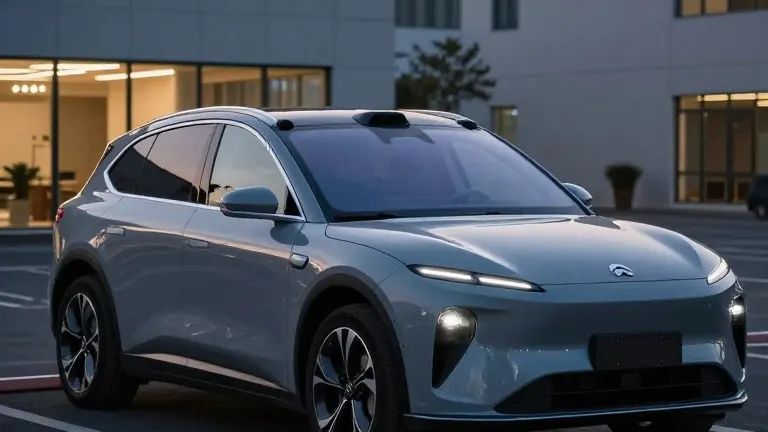
Rivian held a one-hour earnings call on October 29, 2026, where leadership discussed the company's financial performance and strategic direction. The conversation quickly shifted away from standard manufacturing metrics toward the automaker's aggressive push into autonomous vehicle technology.
RJ Scaringe, Rivian's chief executive officer, dedicated nearly half of the call to detailing the company's self-driving roadmap. He spoke at length about the upcoming point-to-point hands-free driving feature, which will initially be deployed for internal testing and validation among Rivian employees in 2026. The company intends to release the feature to general customers in 2027, followed by a launch of robotaxi vehicles in partnership with Uber in 2028.
Derek Mulvey, vice president of finance, framed the autonomy push as central to the company's financial future. "We believe autonomy is a primary product differentiator, market share driver, and long-term value creator," Mulvey stated. This positioning suggests that Rivian views its software capabilities as equally important to its hardware production in driving long-term shareholder value.
The strategy presents a complex financial balancing act. Rivian is simultaneously attempting to scale production of the R2, its mass-market electric SUV, while funding expensive research and development for custom silicon chips and lidar sensors. The R2 recently became the company's best-selling vehicle by volume, indicating progress in manufacturing, but the high costs of autonomy development could strain resources. Tesla holds a substantial advantage in this space, with its Full Self-Driving system installed on more than 1.7 million active customer vehicles.
Scaringe offered personal insights into the technology's performance during the call. He revealed that he uses the new point-to-point driving system for his daily commute to the office, describing the experience as wonderful. He argued that the technology is at an inflection point where it may become a major purchase criterion for consumers, though he acknowledged uncertainty about how quickly the broader market will shift its preferences toward autonomous capabilities.
Financial data from the third quarter of 2026 showed mixed signals regarding the autonomy business. Rivian reported $605 million in revenue from software and subscription services, a 45 percent increase year over year. The company also generated $256 million in profit from these services, up $102 million from the previous year, with a profit margin of 42 percent. However, when asked about the specific take rate for its Autonomy Plus package, Scaringe declined to provide an exact number, stating only that it had exceeded expectations.
Costs remain a significant concern as the company integrates new hardware into its vehicles. Management warned that rising prices for computer chips, memory, and electronics could impact margins. Specifically, adding two processors and costly lidar sensors to certain R2 models may reduce the profits anticipated from large-scale manufacturing. This expense is comparable to the investments required to maintain a competitive edge against established players like Tesla and Waymo.
The rollout will face technical and legal challenges. The system will require active driver supervision, but edge cases in urban driving and potential vehicle crashes could test the technology's reliability. A high-profile incident could damage the brand, similar to experiences Tesla has had with its own system. The next two years will serve as a critical period for Rivian to prove that it can successfully balance mass-market vehicle production with the high-stakes development of full-stack autonomous driving.
Source: The Verge
More Business · Scam Watch · Report a business · Got a Story?