Netanyahu retains executive power as opponents weigh use of Knesset majority
Israel’s opposition parties could use their election gains to reshape parliament and pursue legislation while divisions delay the formation of a replacement government.
By John Wisniewski ·
Israel’s election has left Benjamin Netanyahu without a parliamentary majority but still in charge of the government, while his opponents hold enough seats to pursue legislation without having agreed on a coalition. The result creates a divide between control of the Knesset and executive authority that could persist for weeks or months.
The six parties opposing Netanyahu secured 67 of parliament’s 120 seats in last week’s vote. Likud and its far-right and ultra-Orthodox allies won 53. However, Jewish-majority parties account for only 48 seats in the opposition bloc, with the Arab-majority Joint List and Ra’am holding the remaining 19. Ideological disagreements and conflicting campaign commitments have complicated efforts to turn those numbers into a government.
The new Knesset will convene on November 10. President Isaac Herzog is expected beforehand to assign a lawmaker the task of forming a government, most likely Gadi Eisenkot, whose Yashar party is the largest in the anti-Netanyahu bloc. The candidate receives 28 days, potentially extended by another 14. Failure could send the mandate to another lawmaker, prolong negotiations and eventually produce another election.
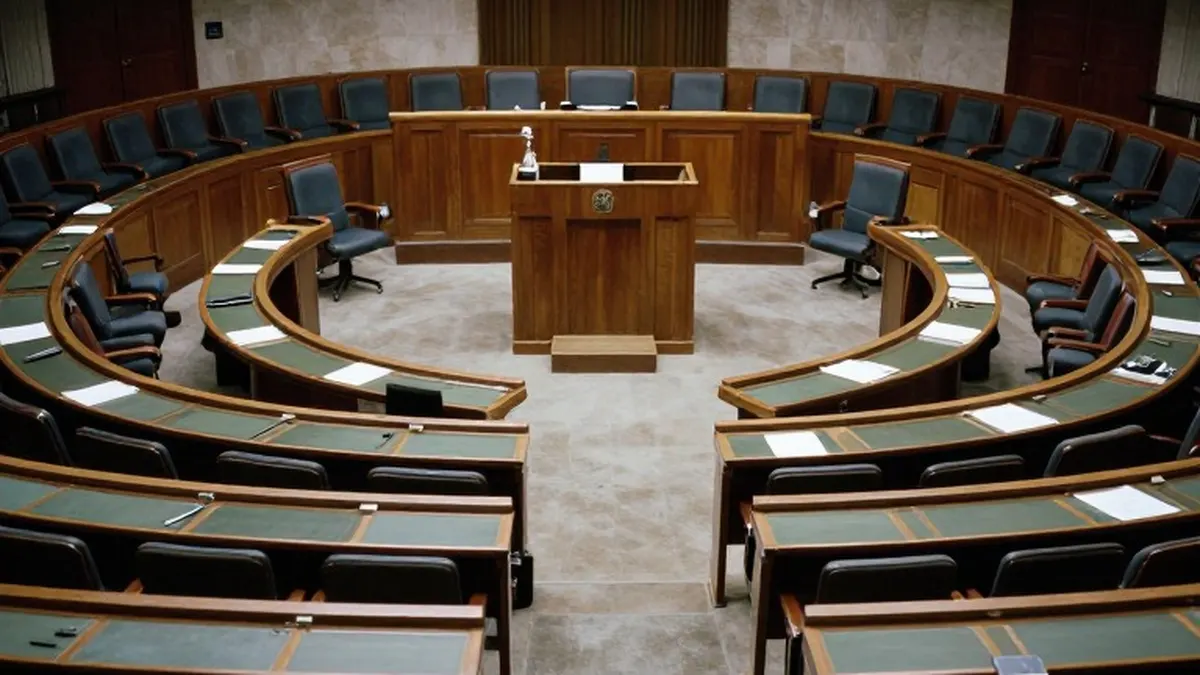
Opposition parties are already coordinating to replace Knesset Speaker Amir Ohana of Likud. They can elect his successor by a simple majority of votes cast once the new parliament takes office. Assaf Shapira, a researcher at the Israel Democracy Institute, explained that the Knesset can exercise its authority independently of whether a new government has been established.
Another priority will be forming the temporary Arrangements Committee, which manages parliamentary business during coalition negotiations and establishes committees needed to advance legislation. Its chair comes from the party of the lawmaker holding the government formation mandate. If that mandate passes from Eisenkot to Netanyahu, Likud would gain the chairmanship, making the opposition’s legislative efforts substantially harder despite its numerical advantage.
Eisenkot wants to establish a state commission investigating the October 7, 2023, Hamas-led attacks, reverse judicial overhaul legislation and introduce military or national service requirements for all Israelis. Yashar is preparing an amendment allowing the Knesset to establish the inquiry through a simple majority vote, because the existing legal routes are not readily available to the bloc without forming a government. The amendment would still require the usual readings and committee proceedings, and Shapira cautioned that it could face legal objections and judicial review.
Other opposition proposals include prime ministerial term limits and restrictions on criminal defendants serving as prime minister. Those measures could encounter legal challenges if considered personally directed at Netanyahu. Shapira also said universal service legislation would be difficult to complete within a potentially brief window because of its economic, demographic and constitutional implications.
Repealing existing legislation could prove easier. Shapira pointed to the judicial overhaul amendment changing the Judicial Selection Committee’s composition, scheduled to take effect when the Knesset convenes. Reversing it before the committee is reconstituted would preserve the earlier arrangement. The bloc could also elect a state comptroller through a simple majority.
Meanwhile, Netanyahu’s caretaker government retains broad powers over security, military operations and foreign affairs until a successor is sworn in. It could legally authorize an attack on Iran under ordinary decision-making procedures, despite lacking a parliamentary majority. Senior appointments and major unexpected spending face additional restrictions, including requirements to justify immediate necessity or urgent security needs.
Source: The Times of Israel