First 10 Australian songs inducted into new National Songbook
Midnight Oil, Yothu Yindi and Helen Reddy are among the inaugural selections in a digital archive honouring songs that shaped Australia's cultural identity.
By John Wisniewski ·
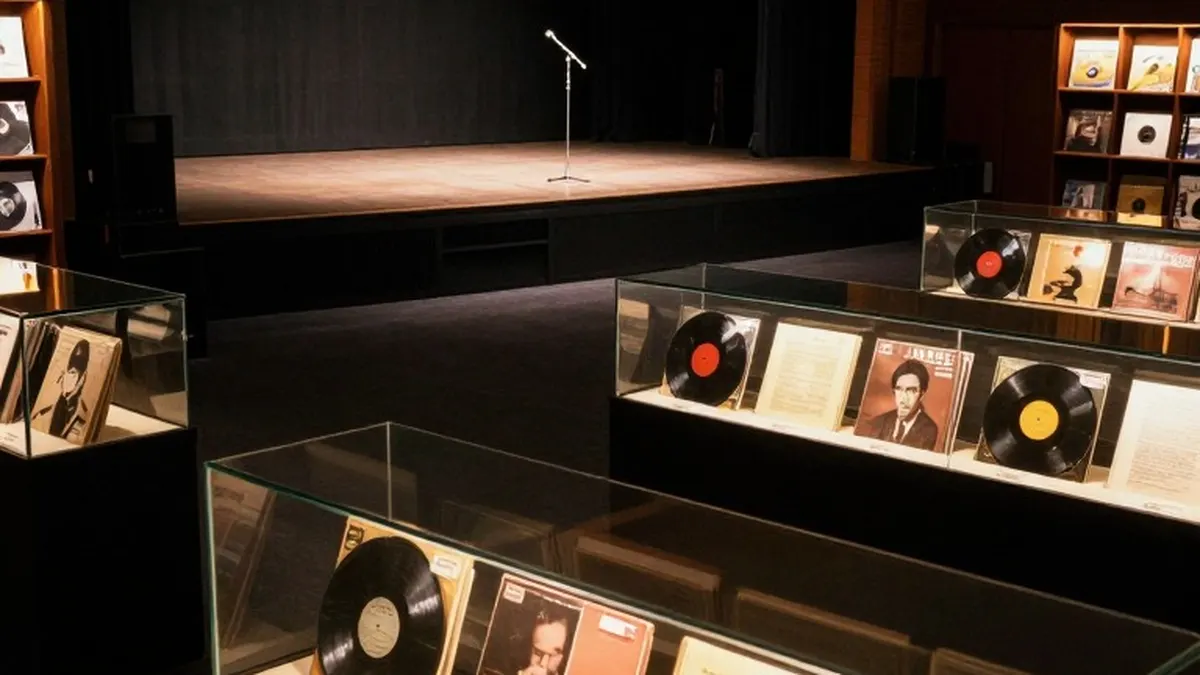
Midnight Oil's Beds Are Burning, Yothu Yindi's Treaty and Helen Reddy's I Am Woman are among the first 10 songs inducted into the National Songbook, a new digital archive dedicated to celebrating and preserving music that has shaped Australia's national cultural identity.
The songbook launched on Wednesday night at the National Film and Sound Archive in Canberra. It is a joint initiative between the NFSA and music rights organisation Apra Amcos, with the inaugural songs chosen by an 11-member panel of music experts that included broadcasters Richard Kingsmill and Zan Rowe, composer Cornel Wilczek and musician Mo'Ju.
Meagan Loader, the NFSA's chief curator, said Apra chair Jenny Morris and NFSA chair Annette Shun Wah facilitated a "very robust conversation" during the selection process. Loader, who was not on the panel, said there is "no such thing as a definitive list when it comes to music", adding: "I hope people see at least one song on there and see themselves reflected in the list. You hear some of these songs and you feel distinctly that they say something about who we are as a nation."
The oldest entry is Waltzing Matilda, written by bush poet Andrew "Banjo" Paterson in 1895 and later composed by Christina Macpherson. The panel said the 1927 recording "remains one of Australia's most enduring hauntings." The most recent is the Presets' My People, an electronic track written by Julian Hamilton and Kim Moyes as a protest against Australia's treatment of asylum seekers. "Its political message may be less immediately apparent to listeners today, but its ferocity remains," the panel said.
Yothu Yindi's Treaty, credited to Dr M Yunupingu, Stuart Kellaway, Witiyana Marika, M Mununggurr, Cal Williams, G Yunupingu, Peter Garrett and Paul Kelly, was honoured as a "landmark protest anthem". Kelly told Guardian Australia he was proud to be part of the song, which began around a campfire at Birany Birany in East Arnhem Land before passing through a Darwin rehearsal room, studios in Melbourne and Sydney, a Glebe hotel room and the Midnight Oil offices. "Like the song, the process of treaty-making around the country is the work of many hands and still ongoing," he said.
Kelly also credited Melbourne electronic producers Filthy Lucre with having a "huge influence" on the track, saying they re-tooled a minor hit, stripped out most of the English vocals and turned it into an international dancefloor success that put Yothu Yindi on the map.
Other inductees include the Easybeats' 1966 garage-rock anthem Friday on My Mind, written by Harry Vanda and George Young and praised for capturing the "restless energy of a generation hungry for romance and escape"; Ruby Hunter's Down City Streets, first recorded for Archie Roach's album Charcoal Lane, about displacement as a member of the Stolen Generations; and Neil Murray's My Island Home, released by the Warumpi Band in 1987 and covered by Christine Anu in 1995, chosen for its "enduring pull of home and belonging".
Not every selection was a commercial release. The Necks' score for the 1998 film The Boys was recognised for its "unsettling" and "off-kilter" qualities, while Peter Sculthorpe's 11-minute Earth Cry, featuring William Barton on yidaki, was chosen for capturing "the vastness of Australia". Loader said she was personally thrilled to see Beds Are Burning, written by Peter Garrett, Rob Hirst and Jim Moginie, make the list, recalling that hearing it as a child was "almost an awakening".
The songbook will grow each year, with a new panel appointed to select 10 additional songs. Eligible works must be written or co-written by an Australian Apra member, be at least a decade old and show demonstrable cultural impact. "We see this first list as a great conversation starter," Loader said. "It'll be really interesting to see in 10 years' time what that songbook will look like."
Source: The Guardian