
Budget Group Urges MTA to Cut Staff to Cover $900 Million Deficit
The Citizens Budget Commission recommends single-operator trains and other cost cuts to close a widening funding gap.
By Karan Cabrera ·
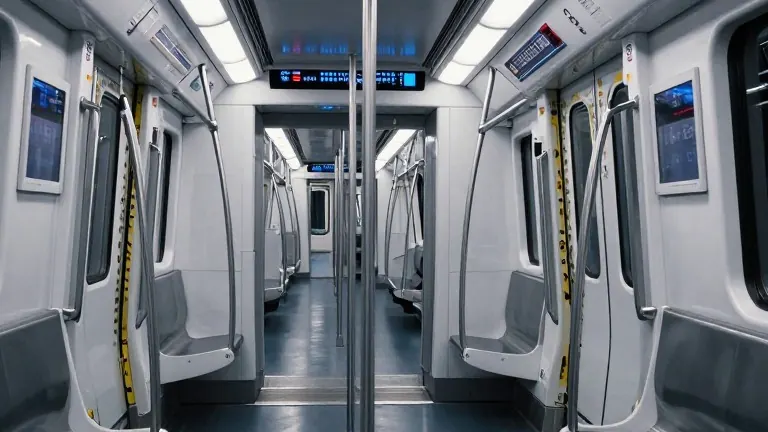
The Citizens Budget Commission issued a report on November 2 urging the Metropolitan Transportation Authority to reduce its workforce to address a projected funding shortfall. The analysis estimates that the MTA faces a deficit of nearly $900 million by 2030 because operating costs are outpacing revenue from fares and taxes. To close this gap, the commission proposes eliminating specific job categories that it argues have become redundant due to technological advancements.
The core of the proposal involves allowing subway trains to run with a single operator instead of the current requirement for two. The commission points to the L and 7 lines, which already operate with computerized signaling systems that automate most functions. On these lines, the second crew member currently spends much of their time pressing a button every 20 seconds to indicate alertness. The report states that removing the operator position on the L and 7 lines would save $36.5 million annually. If the MTA phased out the two-person crew requirement across the entire subway system, the annual savings would reach $500 million.
The recommendation arrives at a sensitive moment for labor negotiations. The Transport Workers Union Local 100 is currently in contract talks representing 40,000 subway and bus employees. The MTA plans to release its 2027 financial plan within the next few weeks. That document will include a 4% increase in fares and tolls, which the board is scheduled to vote on in December.
John Samuelsen, president of the American Federation of Transit Workers, responded to the findings by noting that similar suggestions have been made for decades. He described the move as an attempt to shift the burden of assumed deficits onto workers. The commission’s report argues that legal mandates requiring two-person crews prevent the agency from modernizing and capturing economic efficiencies as technology improves.
In 2025, the state legislature attempted to codify the two-employee requirement into law, but Governor Kathy Hochul vetoed the bill. The veto left the door open for future single-operator operations. The commission acknowledges that the MTA has improved efficiency, citing $576 million in savings this year from operational changes. However, it warns that without cuts to labor and healthcare costs, the agency will face a $300 million deficit next year, which will expand to $900 million by 2030.
Beyond subway crews, the report suggests that reducing more than 1,000 positions at Metro-North and the Long Island Rail Road could save $380 million per year. It also recommends changing how rail commuters are charged, including reviewing tickets before boarding to reduce the need for conductors to walk the cars. Additionally, the commission proposes that MTA retirees pay higher medical insurance premiums, a change that would generate an extra $315 million annually.
The total of these proposed reforms would yield $2.5 billion in annual savings, according to the commission's estimates.
Source: El Diario La Prensa